


Sustainable socks aren’t automatically sustainable just because they say “natural” somewhere on them. What matters is how the material, manufacturing process, and durability work together. That’s exactly where Woolsens’ strength lies.
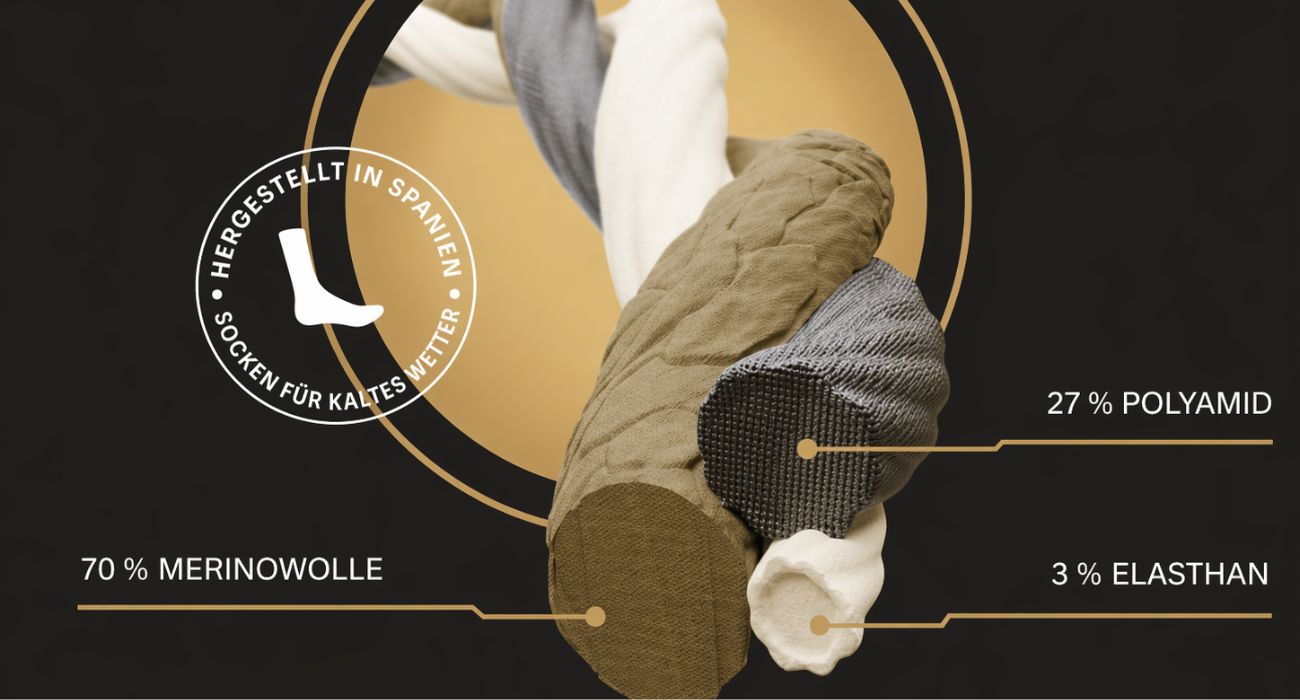
The foundation is a functional fiber blend consisting of70% merino wool, 27% polyamide, and 3% elastomer. The high merino wool content offers natural benefits such as temperature regulation, breathability, and a comfortable feel. Polyamide increases durability, while elastomer improves the fit. The result is not just another eco-friendly blend, but a product that remains useful for longer in everyday life.
However, sustainability isn’t just about the material. Behind the manufacturing process lies a clear commitment to responsible production. This includes the use ofrecycled materials, alow carbon footprint, and the useofrenewable energy from solar panels. At the same time, sustainability also means regional responsibility: creating and securing jobs in rural areas is part of this commitment.
Woolsens socks thus stand for a simple but often overlooked principle: A better product is more sustainable than cheap goods that need to be replaced quickly.
Internal link: The next post explains how the fiber blend affects quality.